
Trauma can also create a disconnection with personal behavior: If you, or someone that you know, are involved in self-destructive behavior, over and over, examine their pasts for imprints of relationship patterns in which that type of behavior was born.
Consider a child who was sexually molested -- and ends up exploiting his/herself through unhealthy relationships or becoming a stripper or prostitute. In a sense, what this person is doing is reenacting the abuse from their past in order to make sense of it.
Numbing out: Victims of trauma often try to escape their emotional pain. They try to numb out by sexualizing events, eating emotions, drinking to dull the event, smoking to feel the buzz of nicotine or using drugs to make the situation temporarily 'disappear.'Shocking, surprising or overwhelming yourself with emotional experiences that you are not prepared to handle will not help you heal.
4.) Acceptance and service: This is characterized by:
-No longer hiding from yourself, your past or your true feelings. See yourself within your own story with compassion and empathy. Be the hero of your own story.
-Being aware of your triggers and not letting your emotions take you hostage. Creating a strategy for coping and recovering when triggers occur.
-Building the capacity to develop warm, loving relationships with others. Avoid or discard harmful relationships. Seek to build new, positive connections.
-Establish a goal and direction for your life. What unique abilities do you have to offer the world?
Source:
McGraw, Patricia. It's not your fault: How healing relationships change your brain and can help you overcome a painful past. IL: Bahaii Publishing, 2004.
Traumatic Stress and the Child Welfare System
Walker, J. S., & Weaver, A. This article defines child traumatic stress, describes some events that can cause traumatic stress, and summarizes the effects it has on children, youth, and society.
Complex Trauma in Children and Adolescents
Cook, A., et al. This article provides a core background for understanding the psychological and physiological effects of multiple traumatic stress experiences on the developing brain. Steps for assessment and treatment are also discussed.
A Real Mother's Embrace: Reflections on Abuse and Recovery
Weaver, A. The guest editor of this issue of Focal Point gives a poignant first-person account of his childhood abuse and subsequent recovery. A strong theme of Aaron’s story is the enduring support and love offered by his foster family.
Evidence-Based Treatment for Children in Child Welfare
Stambaugh, L., Burns, B. J., Landsverk, J., & Rolls-Reutz, J. This article reviews several treatment programs for children in the child welfare system who have experienced traumatic stress. The article focuses on treatments for which there is the best evidence of effectiveness.
Early Intervention as Prevention: Addressing Trauma in Young Children
Groves, B. This article focuses on the need for early intervention to address child traumatic stress in young children. The article also describes the characteristics of effective intervention.
Adapting Evidence-Based Treatments for Use with American Indian and Native Alaskan Children and Youth
Bigfoot, D. S., & Braden, J. This article describes the adaptation of several evidence-based treatments (EBTs) for child traumatic stress for use in Native American communities. The EBTs that are discussed attend to the broad cultural, historical, and intergenerational traumas that are part of the life experience of many Native American youth.
Creating a Trauma-Informed Child Welfare System
Igelman, R., Conradi, L., & Ryan, B. One role of the child welfare system is to remove children from abusive or neglectful home environments. However, the system itself can be a source of trauma. This article provides steps for reducing trauma within the child welfare system.
Child Trauma: The Role of Public Policy
Gerrity, E. This article discusses the impact that federal, state, and local government policies have in promoting increased understanding of and effective response to child traumatic stress. Analysis of current policy issues and areas for improvement is included.

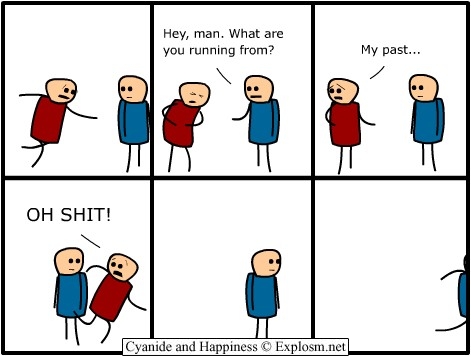
Unlike normal, narrative memories, which fade over time, traumatic memories remain fixed, timeless and contemporary, delivering the same dramatic punch every time.
Why do our brains work this way? The flood of hormones in response to trauma both gives us the energy to fight/flee danger and imprints the memory of that trauma in order to create a once-and-forver learning experience. It is a survival mechanism, so that if a similar danger comes again, we will be wired to instantly react.
Traumatic memories are processed and stored differently than memories of ordinary events. "Normal" memories are encoded verbally, and thereby can be verbally communicated to others afterwards. But traumatic memories are experienced as emotions, sensations and physical states.
The trauma survivor faces an odd contradiction. The memories are so vivid, rich with emotional and sensory details. Yet it's difficult to put words to these experiences, to make cognitive sense out of them.
The phrase "speechless terror" is not a hyperbole; people literally cannot talk when affected in this way. PET scans demonstrate the physiological basis of this phenomenon: during flashbacks, oxygen levels and the verbal centers of the brain are affected.
Source:
Naparstek, Belleruth. Invisible Heroes. NY: Bantam Bell, 2004.
